
Detroit Freight Overflow: Why Shippers Use Toledo Warehouses Instead of Paying Metro Detroit Premiums
Metro Detroit warehouse space is expensive and scarce. Smart shippers are using Toledo's I-75 corridor for overflow storage at 15–25% lower rates.
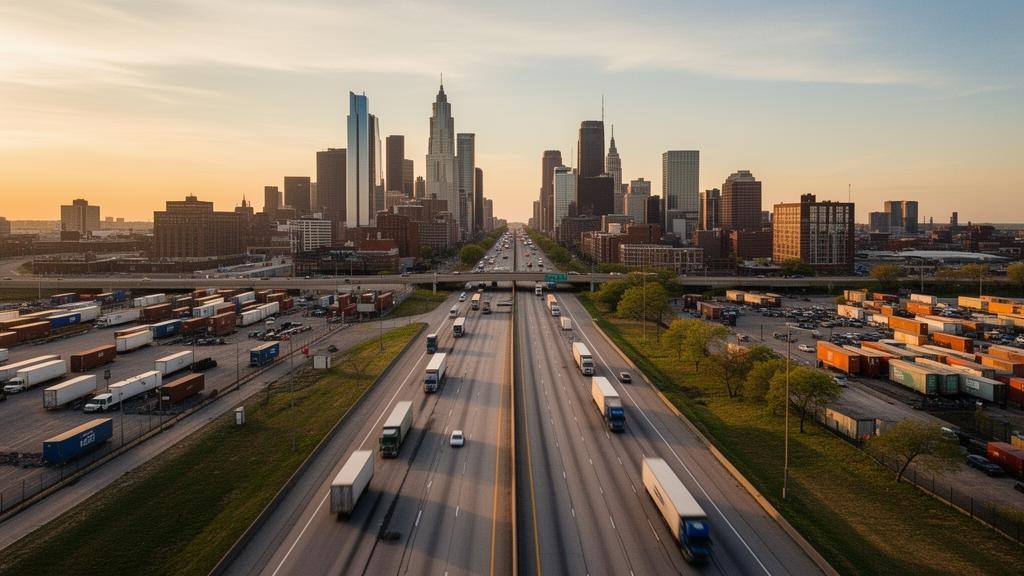
If you ship freight in or out of Metro Detroit, you already know the problem: warehouse space is expensive, scarce, and inflexible. Detroit’s industrial real estate market has tightened significantly over the past several years, driven by automotive production demands, e-commerce fulfillment growth, and speculative development that favors large tenants over flexible short-term users.
For shippers who need overflow capacity, seasonal staging, or short-term warehouse space, the Detroit market often doesn’t have a good answer. That’s why an increasing number of logistics teams are looking 45 minutes south on I-75—to Toledo.
The Metro Detroit Warehouse Problem
Detroit’s warehouse market presents several challenges for freight shippers:
- High occupancy rates — Class A industrial vacancy in Metro Detroit has been trending below 5%
- Long-term lease requirements — most available space requires 3–5 year commitments
- Premium pricing — warehouse rates in Metro Detroit are 15–25% higher than surrounding markets
- Congestion — yard access and dock scheduling are competitive at high-demand facilities
- Limited flexibility — scaling up or down requires lease renegotiation
For a manufacturer who needs 2,000 pallet positions for 90 days during a product launch, or a broker who needs emergency staging for a rejected load, Detroit’s warehouse market simply isn’t set up to help.
The Toledo Alternative: 45 Minutes, 25% Savings
Toledo offers a compelling alternative for Detroit-area freight overflow:
Geographic Advantage
- 45 minutes south on I-75 — the same interstate that connects to Detroit’s freight infrastructure
- Direct access to I-80/I-90 (Ohio Turnpike) — east-west connectivity to Cleveland, Chicago, and the East Coast
- No urban congestion — faster dock access, easier yard maneuvering, and quicker turnaround times
Cost Advantage
- 15–25% lower warehouse rates than comparable Metro Detroit facilities
- No long-term lease requirements — month-to-month and project-based terms available
- Lower accessorial costs — less congestion means fewer detention charges and faster handling
- Competitive labor market — warehouse staffing is more available and cost-effective
Flexibility Advantage
- Scale from 50 to 5,000+ pallet positions without contract changes
- Same-day dock access for emergency freight
- Drop trailer capability — park in the yard and pick up when ready
- Value-added services — cross-dock, kitting, labeling, and rework available on-site
Who Uses Toledo for Detroit Freight Overflow?
Several types of shippers benefit from the Toledo overflow strategy:
Automotive Tier 1 and Tier 2 Suppliers
Automotive supply chains are famously tight on timing and space. When a production schedule shifts or a new program launches, suppliers often need temporary staging that their existing facility can’t accommodate. Toledo provides the buffer without the Detroit premium.
E-Commerce and Retail Distributors
Seasonal demand spikes (holiday, back-to-school, promotional events) create temporary storage needs that don’t justify a Detroit lease. Toledo offers the overflow capacity at a fraction of the cost, with quick replenishment runs up I-75.
Cross-Border Freight Operations
Freight moving between Canada and the US through the Detroit–Windsor corridor often needs pre-border or post-border staging. Toledo’s position on I-75 makes it a natural staging point—close enough for same-day moves, far enough to avoid border-area congestion and pricing.
Freight Brokers Managing Emergency Transfers
When loads are rejected, drivers run out of hours, or carriers break down, brokers need a fast staging option. Toledo’s accessible location and no-appointment dock access make it ideal for emergency freight recovery.
The I-75 Corridor Advantage
The I-75 corridor between Detroit and Toledo is one of the most heavily trafficked freight lanes in the Midwest. This creates a natural logistics pipeline:
- Northbound: Staged freight departs Toledo and arrives at Metro Detroit receivers within 45–60 minutes
- Southbound: Rejected loads, returns, and overflow can be diverted to Toledo for staging without significant route deviation
- Cross-dock potential: Freight can be consolidated in Toledo and dispatched as full truckloads to Detroit, reducing per-unit delivery costs
The corridor also connects to the broader Great Lakes freight network, meaning Toledo-staged freight can easily be redirected to Columbus, Cleveland, Indianapolis, or Chicago if plans change.
Real Scenario: How the Overflow Strategy Works
Here’s a typical example of how a Detroit-based shipper uses Toledo overflow:
- Manufacturer in Sterling Heights has a 90-day product launch requiring 1,500 extra pallet positions
- Detroit market quotes $12/pallet/month with a 12-month minimum commitment
- Toledo 3PL quotes $9/pallet/month with a 90-day term and month-to-month extension option
- Savings: $4,500/month on storage alone, plus no long-term commitment risk
- Replenishment: Daily or every-other-day runs up I-75 keep the production line fed
- At 90 days: Scale down to zero with no penalty
Total savings over the project: $13,500+ in direct costs, plus avoided lease obligations worth $108,000+ over the remaining commitment period.
When NOT to Use Toledo Overflow
Toledo isn’t the right answer for every situation:
- If you need space within 15 minutes of a specific Detroit plant for JIT line-side delivery, Toledo adds transit time that may not work
- If your volume requires 50,000+ sq ft permanently, a Detroit lease may make sense if you can find availability
- If your freight is temperature-controlled, verify the Toledo facility has the cold chain capability you need
For everything else—overflow, staging, emergency recovery, seasonal capacity, project-based storage—Toledo delivers better value.
How Sam’s Toledo 3PL Serves Detroit Freight
We work with dozens of shippers who use our Toledo facility as their Detroit overflow solution:
- 200,000+ sq ft of warehouse space on the I-75 corridor
- Multiple Toledo-area facilities with same-day dock access
- Secure drop yards in our network for trailer staging
- Flexible terms — no long-term lease, scale as needed
- Full cross-dock capability — consolidate, sort, and redistribute
- 45-minute reach to Metro Detroit receivers
Whether you need 100 pallets for a week or 5,000 pallets for a quarter, we build the plan around your operation—not a lease template.
FAQ
How far is Toledo from Metro Detroit for freight delivery?
Toledo is approximately 45 minutes south of Metro Detroit on I-75, making same-day replenishment runs practical and cost-effective.
How much cheaper is Toledo warehouse space compared to Detroit?
Toledo warehouse rates are typically 15–25% lower than comparable Metro Detroit facilities, with the added benefit of flexible terms instead of multi-year lease commitments.
Can I use Toledo overflow storage for just a few months?
Yes. Sam's Toledo 3PL offers month-to-month and project-based terms with no long-term lease requirements. Scale up or down as your operation demands.
What types of companies use Toledo for Detroit freight overflow?
Automotive Tier 1/2 suppliers, e-commerce distributors, cross-border freight operations, and freight brokers managing emergency transfers commonly use Toledo as their Metro Detroit overflow solution.
Does Toledo 3PL offer cross-dock for Detroit-bound freight?
Yes. We provide full cross-dock capability including consolidation, sorting, and redistribution. Freight can be consolidated in Toledo and dispatched as full truckloads to Detroit receivers.
Related reading
Emergency Freight ·
How Cross Dock Warehouses Help Prevent Supply Chain Delays: Speed, Flexibility, and Strategic Positioning
Cross-dock warehouses are the supply chain's safety valve — preventing small delays from cascading into costly disruptions. Here's how they work.
Emergency Freight ·
How Cross Dock Warehouses Solve Freight Emergencies: Speed, Flexibility, and Zero Wasted Time
When freight emergencies strike, cross-dock warehouses provide the speed and flexibility brokers need. Here's how they work and when to use them.
Onshoring & Overflow Storage ·
Onshoring Is Forcing a New Reality: Overflow Storage and Rapid Cross-Dock for Great Lakes Manufacturers
As manufacturers rebalance supply chains, overflow storage and flexible cross-dock become essential. Here's how Toledo supports it.