
How Cross Dock Warehouses Solve Freight Emergencies: Speed, Flexibility, and Zero Wasted Time
When freight emergencies strike, cross-dock warehouses provide the speed and flexibility brokers need. Here's how they work and when to use them.
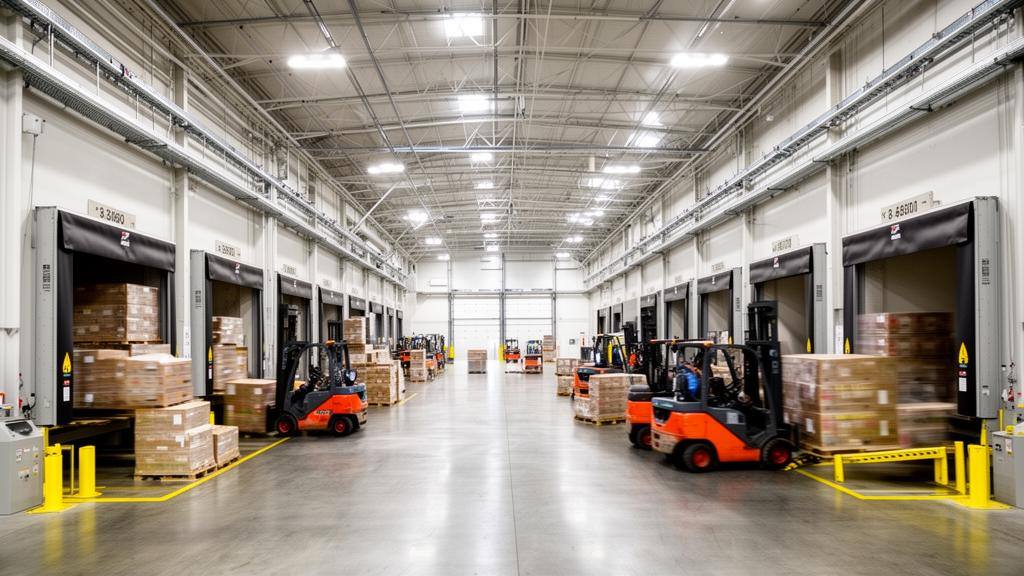
Freight emergencies don’t follow a schedule. A rejected load at 3 PM, a damaged pallet discovered during transit, a carrier breakdown that leaves 40,000 lbs stranded on the interstate—these scenarios happen every day in logistics, and the brokers and shippers who survive them are the ones with a cross-dock contingency plan.
Cross-dock warehouses are purpose-built for speed. Unlike traditional storage facilities, they’re designed to receive, sort, and ship freight with minimal dwell time. That makes them the ideal solution for freight emergencies where every hour counts.
What Makes Cross-Dock Different from Traditional Warehousing
Traditional warehousing is optimized for storage duration. Goods arrive, get put away in racking, and sit until they’re needed. The facility makes money on storage time.
Cross-dock is the opposite. It’s optimized for throughput speed:
- Inbound freight arrives at one set of dock doors
- Goods are sorted, consolidated, or reconfigured on the dock floor
- Outbound freight departs from the opposite dock doors
- Total dwell time: hours, not days
This model is perfect for emergencies because there’s no put-away process, no racking assignment, no inventory system onboarding. Freight moves through the building as fast as the forklifts can handle it.
Emergency Scenario 1: Rejected Load Recovery
A receiver rejects a load—wrong SKU mix, damaged packaging, or documentation mismatch. The driver has nowhere to go. Here’s how cross-dock solves it:
- Driver diverts to the nearest cross-dock facility
- Load is unloaded and inspected — damage is documented with photos
- Freight is sorted — separate what’s acceptable from what’s not
- Good freight is reloaded for redelivery
- Damaged or incorrect freight is staged for return or disposition instructions
Total turnaround: typically 2–4 hours for a standard truckload.
Emergency Scenario 2: Load Transfer Between Trailers
A carrier breaks down or a driver runs out of hours. The freight needs to move to a different trailer or carrier:
- Original trailer is brought to the cross-dock yard
- Freight is transferred to a new trailer — forklift-handled for palletized goods, or hand-stacked for floor-loaded freight
- New BOL is generated with updated carrier information
- New driver departs with the freight
This eliminates the need for the original driver to wait for repairs or restart their HOS clock.
Emergency Scenario 3: Pallet Restacking and Rework
Freight shifted during transit, pallets broke, or shrink wrap failed. The load can’t be delivered as-is:
- Freight is unloaded and assessed
- Damaged pallets are replaced — most cross-dock facilities keep pallet inventory on hand
- Loads are restacked and re-wrapped to meet receiver specifications
- Quality photos are taken for claims documentation
- Reloaded and dispatched for delivery
Emergency Scenario 4: Split Shipment Consolidation
A shipper needs to combine partial loads from multiple origins into a single delivery:
- First load arrives and is staged on the dock
- Subsequent loads arrive and are matched to the consolidation order
- All freight is loaded onto a single outbound trailer
- Consolidated BOL is prepared
Cross-dock makes this possible in hours instead of the days required by a traditional warehouse.
What to Look for in an Emergency Cross-Dock Facility
Not all cross-dock warehouses are created equal. For emergency use, prioritize:
- No-appointment access — emergencies don’t wait for scheduling
- Extended or 24-hour receiving — problems happen outside business hours
- Sufficient dock doors — you don’t want to queue behind scheduled freight
- Yard space for trailer staging — the ability to drop a trailer and come back later
- Forklift capacity — multiple units available for rapid turnaround
- Documentation capability — photos, new BOLs, damage reports
The Cost of Delay vs. the Cost of Cross-Dock
Brokers sometimes hesitate to use cross-dock services because of the handling cost. But compare:
- Cross-dock handling: $150–500 depending on load size and service
- Alternative — detention at receiver: $500–2,000+
- Alternative — driver layover: $300–600/day
- Alternative — customer chargeback: $250–1,500
- Alternative — lost account: incalculable
The ROI on emergency cross-dock is almost always positive, especially when you factor in relationship preservation.
Why Toledo Cross-Dock Facilities Serve the Midwest
Toledo’s location at the I-75/I-80 junction makes it accessible from the entire Great Lakes freight network:
- Detroit loads diverted south reach our Toledo docks in about 45 minutes
- Columbus, Cleveland, and Indianapolis are all within 2–3 hours
- Cross-border freight from Canada can stage here before redistribution
- Available dock capacity — we’re not oversubscribed like Metro Detroit facilities
How Sam’s Toledo 3PL Handles Freight Emergencies
Our cross-dock facility is built for exactly these situations:
- Same-day dock access — call ahead and we’ll have a door open
- A network of facilities with dock-high and drive-in options
- Secure yard space for trailer staging and overflow
- Forklift fleet ready for rapid load/unload
- Documentation services — photos, BOLs, damage reports
- No minimums — handle one pallet or one hundred
When your freight plan falls apart, we help you put it back together.
FAQ
What is cross-dock warehousing and how does it differ from storage?
Cross-dock warehousing is designed for rapid throughput—freight arrives, gets sorted or reconfigured, and ships out within hours. Unlike traditional storage, there's no put-away or racking process.
Can a cross-dock warehouse handle freight emergencies without an appointment?
The best cross-dock facilities offer no-appointment access for emergencies. Sam's Toledo 3PL provides same-day dock access with a simple call-ahead.
How much does emergency cross-dock handling cost?
Emergency cross-dock handling typically costs $150–500 depending on load size and services needed, which is significantly less than the $500–2,000+ cost of detention, layover, and chargebacks.
What types of freight emergencies can cross-dock solve?
Common scenarios include rejected load recovery, load transfers between trailers, pallet restacking and rework, split shipment consolidation, and damaged freight sorting.
How quickly can a cross-dock facility turn around an emergency load?
Standard truckload turnarounds typically take 2–4 hours at a well-equipped cross-dock facility, including unloading, sorting/rework, and reloading.
Related reading
Emergency Freight ·
How Cross Dock Warehouses Help Prevent Supply Chain Delays: Speed, Flexibility, and Strategic Positioning
Cross-dock warehouses are the supply chain's safety valve — preventing small delays from cascading into costly disruptions. Here's how they work.
Emergency Freight ·
Trailer to Trailer Freight Transfers Explained: How Cross-Dock Warehouses Keep Loads Moving
Trailer-to-trailer freight transfers are one of the most common cross-dock operations. Here's how they work, when they're needed, and what to look for in a transfer facility.
Emergency Freight ·
What Happens When a Truck Misses a Delivery Window? A Freight Broker's Recovery Playbook
A missed delivery window can cascade into detention fees, chargebacks, and lost accounts. Here's a step-by-step recovery plan using regional 3PL staging.