
What Is Freight Restacking and Why It Happens: A Guide for Brokers, Carriers, and Shippers
Freight restacking is one of the most common cross-dock operations. Here's what causes it, how it works, and how to find a facility that handles it right.
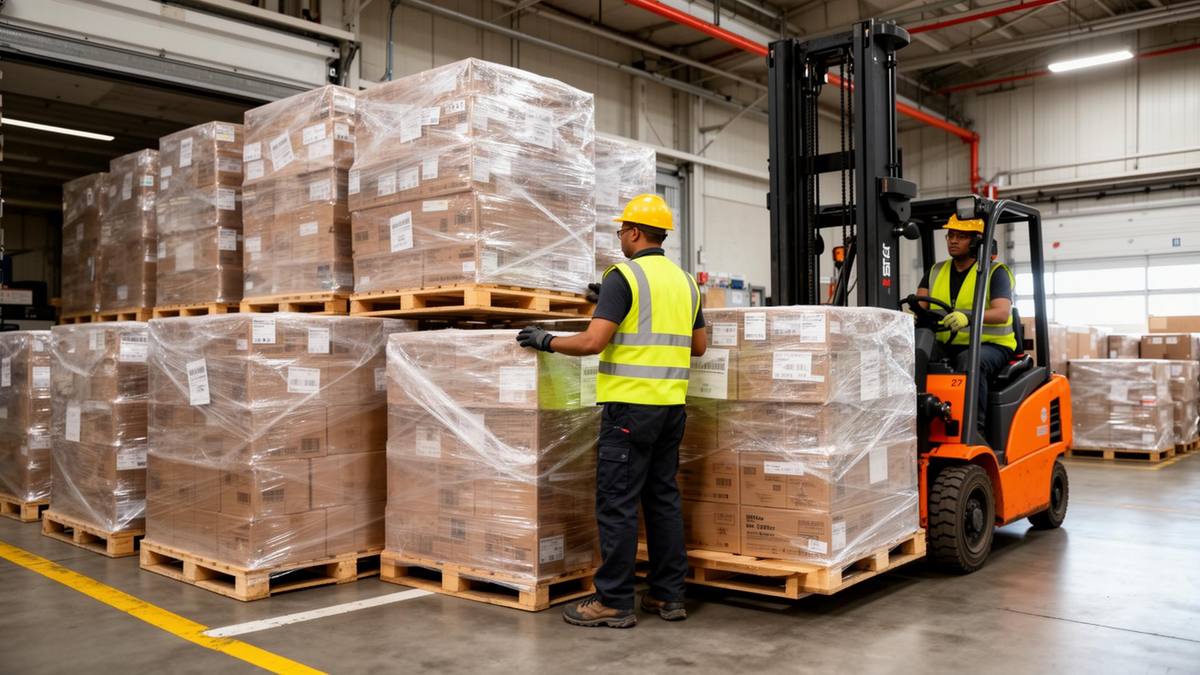
Freight restacking — also called pallet rework, load repair, or re-palletization — is the process of unloading damaged, shifted, or improperly stacked freight and rebuilding it to meet delivery standards. It’s one of the most common reasons freight ends up at a cross-dock warehouse, and understanding when and why it happens helps brokers, carriers, and shippers manage costs and prevent downstream rejections.
Why Freight Needs Restacking
Freight doesn’t always arrive at its destination in the same condition it left the shipper. Several factors cause loads to shift, pallets to break, and shrink wrap to fail:
Transit Damage
The most common cause of restacking needs:
- Hard braking and acceleration — pallets slide forward and backward
- Sharp turns and lane changes — lateral forces topple stacked goods
- Rough road surfaces — vibration loosens shrink wrap and shifts boxes
- Loading dock impacts — forklifts can bump pallets during loading
Improper Loading
Loading errors that create restacking needs downstream:
- Insufficient shrink wrap — too few layers or wrong tension
- Poor pallet stacking — heavy items on top of light, uneven weight distribution
- No load locks or dunnage — nothing preventing movement during transit
- Mixed pallet sizes — creates gaps that allow shifting
Environmental Factors
External conditions that affect freight integrity:
- Temperature changes — shrink wrap contracts and expands
- Humidity — weakens cardboard boxes, causing collapse
- Extended transit time — longer exposure to all of the above
Receiver Requirements
Sometimes the freight is fine, but doesn’t meet the receiver’s specifications:
- Different pallet configuration requested (e.g., GMA pallets required, CHEP sent)
- Stack height limits at the receiving warehouse
- Label placement requirements that differ from the shipper’s standards
- Case orientation specifications for automated scanning
The Restacking Process at a Cross-Dock Facility
When freight arrives needing restacking, here’s what happens at a professional facility:
1. Assessment and Documentation
- Freight is unloaded and visually inspected
- Photos are taken of the as-received condition — critical for claims
- Damage is documented — broken pallets, collapsed boxes, moisture, etc.
- Count verification — ensure the correct number of units are present
2. Sorting
- Damaged goods are separated from undamaged
- Items are grouped by destination if the load is being split
- Unsalvageable items are set aside with documentation for claims
3. Restacking
- New pallets are sourced if originals are broken
- Goods are restacked according to receiver specifications
- Proper shrink wrap is applied — correct number of layers, proper tension
- Labels are verified or reapplied as needed
4. Quality Check
- Restacked pallets are inspected for stability
- Photos taken of the completed restack — proof of condition for the receiver
- Pallet count and weight are verified against the BOL
5. Reload
- Restacked freight is loaded onto the outbound trailer
- Load locks and dunnage are applied to prevent shifting in transit
- Updated BOL is generated if quantities or configurations changed
Common Restacking Scenarios for Brokers
Freight brokers encounter restacking needs regularly. Here are the most common scenarios:
- Receiver refuses a load due to damaged packaging — freight is diverted to a cross-dock for rework before redelivery
- Driver reports shifted load mid-transit — freight is restacked at the nearest facility before continuing
- Cross-border freight needs re-palletization to meet US or Canadian receiver specs
- Multi-stop load needs reconfiguration — restacking to optimize delivery sequence
- Seasonal product stacked too high — receiver’s warehouse has lower clear heights
What to Look for in a Restacking Facility
Not every warehouse handles restacking well. Key requirements:
- Pallet inventory on hand — GMA, CHEP, and custom sizes
- Shrink wrap capability — machine and hand-wrap options
- Experienced labor — restacking is physical work that requires care
- Photo documentation — before and after shots for every job
- Same-day turnaround — restacking shouldn’t add days to transit
- Fair pricing — per-pallet or per-hour rates, not inflated emergency fees
The Cost of NOT Restacking
Skipping restacking and attempting delivery with a damaged load creates worse outcomes:
- Receiver rejection — the load is refused, triggering detention and return costs
- Damage claims — receiver documents damage on the BOL, filing claims against the carrier
- Product loss — goods that could have been saved are written off
- Relationship damage — shippers lose confidence in the carrier and broker
The cost of restacking at a cross-dock facility (typically $5-15 per pallet) is a fraction of the cost of a receiver rejection ($500-2,000+ in total costs).
How Sam’s Toledo 3PL Handles Freight Restacking
Our cross-dock facility provides professional restacking and load rework services:
- Same-day restacking — most loads completed within 2-4 hours
- Pallet inventory — GMA pallets on hand, other sizes available
- Shrink wrap — machine wrap for high-volume, hand wrap for custom jobs
- Photo documentation — before, during, and after photos for every restack
- Count verification — piece counts matched against BOL
- Fair pricing — per-pallet rates, no emergency surcharges
- Multiple facilities — capacity to handle your load without queuing
With freight transfer facilities across the Toledo area on the I-75 corridor serves brokers, carriers, and shippers who need fast, professional restacking to keep deliveries on track.
FAQ
What is freight restacking?
Freight restacking (also called pallet rework or load repair) is the process of unloading damaged, shifted, or improperly stacked freight and rebuilding it to meet delivery standards — including re-palletizing, re-wrapping, and re-labeling.
Why does freight need to be restacked?
Common causes include transit damage (hard braking, rough roads), improper loading (insufficient wrap, poor stacking), environmental factors (temperature, humidity), and receiver-specific requirements for pallet configuration or labeling.
How much does freight restacking cost?
Professional restacking at a cross-dock facility typically costs $5-15 per pallet, which is a fraction of the $500-2,000+ total cost of a receiver rejection caused by delivering a damaged load.
How long does restacking take at a cross-dock warehouse?
Most restacking jobs are completed same-day, typically within 2-4 hours. This includes unloading, assessment, photo documentation, restacking, quality check, and reloading.
Does Toledo 3PL provide photo documentation for restacking?
Yes. We photograph freight before, during, and after every restack — providing documented evidence of condition for claims protection and receiver assurance.
Related reading
Emergency Freight ·
Trailer to Trailer Freight Transfers Explained: How Cross-Dock Warehouses Keep Loads Moving
Trailer-to-trailer freight transfers are one of the most common cross-dock operations. Here's how they work, when they're needed, and what to look for in a transfer facility.
Emergency Freight ·
How Cross Dock Warehouses Help Prevent Supply Chain Delays: Speed, Flexibility, and Strategic Positioning
Cross-dock warehouses are the supply chain's safety valve — preventing small delays from cascading into costly disruptions. Here's how they work.
Emergency Freight ·
How Cross Dock Warehouses Solve Freight Emergencies: Speed, Flexibility, and Zero Wasted Time
When freight emergencies strike, cross-dock warehouses provide the speed and flexibility brokers need. Here's how they work and when to use them.